SpeechPathologyGraduatePrograms.org is an educational resource dedicated to helping prospective students navigate their path to becoming licensed speech-language pathologists. Our content is maintained by our editorial staff, with contributions and interviews from speech-language pathology professionals, and covers licensing requirements, accreditation standards, and career opportunities across the 50 states and the District of Columbia.
Our Mission
Speech-language pathologists work as team players alongside physicians and nurses in acute care settings, augmenting and supporting the work of physical and occupational therapists in rehabilitation clinics, and helping educators and parents implement individual education plans in the public school system.
In keeping with this cooperative spirit, SpeechPathologyGraduatePrograms.org was created to support those entering the field of communicative sciences and disorders by providing a dedicated resource where they can learn about graduate program options, state licensing requirements, national certification, specialized areas of practice, earning potential, and more.
At SpeechPathologyGraduatePrograms.org, you’ll find:
- State-by-state licensing resources for the 50 states and the District of Columbia, covering education, examination, application, and related requirements, with links to official licensing authorities
- A state licensing overview that provides key details for each licensing jurisdiction at a glance
- Student resources that explain education options and list SLP graduate programs by state, including programs accredited by the CAA (verify current accreditation status through the CAA’s official program directory)
- State and regional salary information based on U.S. Bureau of Labor Statistics data, with metropolitan-area figures where available
- Links to preparation materials for the Praxis Examination in Speech-Language Pathology (5331), administered by ETS, and details on how to qualify for the Certificate of Clinical Competence in Speech-Language Pathology (CCC-SLP) through the American Speech-Language-Hearing Association (ASHA)
- Information on specialized areas of practice, practice settings, and related specialty certification
ASHA administers the national CCC-SLP certification program, while individual state licensing boards or other designated regulatory agencies establish and enforce professional licensure requirements. Requirements vary by jurisdiction, and some school-based positions have additional or separate education-agency credentialing requirements.
Our Story in Milestones
The profession organizes
After discussions in Iowa City, the American Academy of Speech Correction is formally established in New York City in December. It becomes the American Speech and Hearing Association in 1947 and the American Speech-Language-Hearing Association (ASHA) in 1978.
Professional licensure begins
Florida becomes the first state to require licensure for audiologists, an early milestone in the regulation of the speech and hearing professions. Today all 50 states and the District of Columbia regulate speech-language pathology practice, with requirements and school-based credentials that vary by jurisdiction.
A career that spans the field
Dr. Paul T. Fogle, one of the SLPs we’ve interviewed, dates his career in speech-language pathology to 1971. He went on to become a university educator, textbook author, and clinical practitioner.
Building the site with the people who do the work
Our About page dates to December 2011, and we have covered speech-language pathology graduate programs, licensure, and careers since 2012. As the site grew, we went straight to practicing speech-language pathologists: around 2017 and 2018, SLPs working in schools, hospitals, NICUs, telepractice, and international missions sat down with us for in-depth interviews that shaped how we explain the profession. Read them in Speech Pathology Interviews: Real Career Stories from 5 Practicing SLPs.
Keeping pace with a growing field
Employment opportunities in speech-language pathology are projected to grow, and the path into the field keeps changing, from graduate program options and accreditation to state licensing rules and certification standards. We continue to update our guides and publish new resources, including our Best SLP Master’s Programs rankings, which grade CAA-accredited programs on published student outcomes such as Praxis pass rates, on-time completion, and employment.
Our Editorial Standards
Our editorial team reviews and updates content using authoritative sources. We prioritize current, authoritative information by consulting official sources, including the U.S. Bureau of Labor Statistics for salary data, the American Speech-Language-Hearing Association (ASHA) for certification requirements, state licensing boards for jurisdiction-specific regulations, and the Council on Academic Accreditation in Audiology and Speech-Language Pathology (CAA) for program accreditation status.
We prioritize changes to licensing requirements, program accreditation, salary data, and professional standards, correct identified errors, and work to keep information current.
Everything we publish follows our editorial standards: where our facts come from, how we use AI, and how each article is fact-checked by a person before it’s published.
SLPs We’ve Interviewed
Practicing speech-language pathologists have shared their experience with us in in-depth interviews about graduate education, licensing, and career development. Titles and employers reflect each person’s role at the time of the interview unless noted.
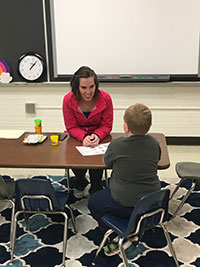
Lindsey Spilecki, CCC-SLP, is an ASHA-certified speech-language pathologist with the Hancock County Schools in West Virginia, where she works with students with language and swallowing disorders. She graduated with her master’s in Speech Pathology and Communication Disorders from California University of Pennsylvania before earning the CCC-SLP and state licensure.
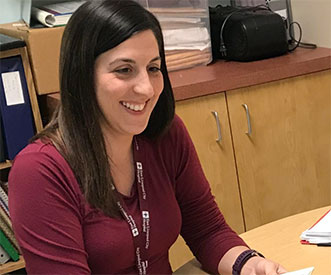
Briana Ralph, CCC-SLP, is a clinically focused speech-language pathologist providing inpatient, outpatient, nursing home, and home health services for children and adults. She completed her bachelor’s in SLP at West Liberty University and her master’s through West Virginia University before earning her CCC-SLP and launching her career in clinical practice.
Dr. Paul T. Fogle has been a Speech-Language Pathologist since 1971. He earned his BA and master’s in Speech Pathology and Audiology from California State University, Long Beach, and his PhD in Speech-Language Pathology from the University of Iowa. Dr. Fogle is a retired professor emeritus and the author of numerous textbooks, including Foundations of Communication Sciences and Disorders, Counseling Skills for Speech-Language Pathologists and Audiologists, and Essentials of Communication Sciences and Disorders, 2nd Edition. He taught at the university level for 35 years, has maintained a private practice for more than 45 years, and has served as an expert witness in more than 55 medical-legal cases.
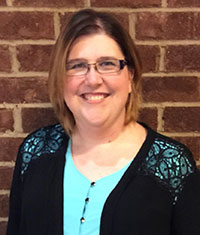
Alyssa Conger, M.S., CCC-SLP, is a pediatric speech-language pathologist in Tennessee who serves children with articulation, language, and autism-related communication needs at Cookeville Regional Medical Center Outpatient Rehabilitation. She earned her master’s from Tennessee State University, has worked in public schools and telepractice, and served as president of the Tennessee Association of Audiologists and Speech-Language Pathologists (TAASLP).
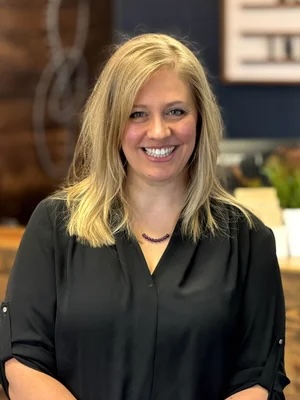
Kyrsten Theodotou, MA, CCC-SLP, is a speech-language pathologist and clinic manager at Infinity Neuromotor Development Center of Minnesota, where she provides speech-language and feeding interventions. She has more than thirteen years of experience in outpatient hospital settings, including Cincinnati Children’s Hospital, Hennepin Healthcare, and Masonic Children’s with M Health Fairview, and specializes in early childhood speech and language evaluation and in feeding and swallowing interventions for children with complex medical needs. At the time of her interview, she was a pediatric speech-language pathologist at the University of Minnesota Pediatric Rehabilitation Clinic, after serving on the Pediatric Brain Injury Team and the Growth and Nutrition Team at Hennepin County Medical Center.
All five conversations are collected in Speech Pathology Interviews: Real Career Stories from 5 Practicing SLPs. These interviews were originally conducted in earlier years and brought together in our November 2025 collection; employment details and professional requirements discussed in them reflect their original context.
Writers Who Have Contributed
Over the years, these writers helped build SpeechPathologyGraduatePrograms.org, researching and writing the original guides that turned licensing rules, accreditation standards, and practitioner interviews into resources prospective students could use. Today our content is produced and updated by our editorial staff, following our editorial standards.
Amy Barnard
Writer and copywriter
Amy has written for nonprofits and worked as a copywriter since 2001. She holds a BS in English-Writing and brings personal experience working with individuals on the autism spectrum to her writing on education and careers.
Writer; PhD scientist
Dr. Helga George writes about higher education, healthcare, and psychology after a career in plant-biology research. She holds a BS in Agriculture and a PhD in Plant Pathology from Cornell University and an MS in Plant Pathology from the University of Massachusetts Amherst, and completed a postdoctoral fellowship at UC Santa Barbara.
Writer and grant-writing consultant
Hannah is a writer and grant-writing consultant who covers education and career topics. She holds a BA in English.
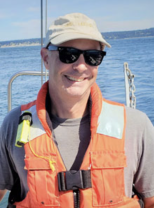
Author and IT consultant
Scott is an author and IT consultant based in the Pacific Northwest. He holds a BA in English from the University of Washington and has spent more than 20 years in information technology, experience that gives him a sharp eye for clear, precise explanations of technical subjects.
Writer and editor
Rebecca is a Pittsburgh-based writer and editor with more than 15 years of experience. She holds a BA in journalism and communications, and her work includes career articles developed from interviews she conducted with working professionals.
Contact Us
To contact us for updates or any other inquiries, please email [email protected].
Whether you’re exploring graduate programs, researching state licensing requirements, or planning your career path in speech-language pathology, we’re here to help you navigate your journey.