

To become an audiologist, you must earn a Doctor of Audiology (AuD) degree—typically 4 years for your bachelor’s degree followed by 3-4 years for the doctoral program, totaling 7-8 years of education. After graduation, you’ll pass the Praxis exam, obtain state licensure, and pursue professional certification, such as the CCC-A from ASHA. The complete process typically takes 7-9 years, from the start of undergraduate studies through licensure.
Audiologists help hundreds of thousands of Americans identify and address hearing problems every year. According to the National Institute on Deafness and Other Communication Disorders, around 15 percent of American adults report some hearing difficulty. Two or three out of every thousand children have some level of detectable hearing loss in one or both ears.
Together with speech-language pathologists, audiologists provide critical assistance to people with speech, hearing, and swallowing impairments. Watching a toddler’s face light up as their cochlear implants deliver the new experience of sound for the first time is incredibly satisfying work.
But becoming an audiologist takes years of study and tremendous dedication. Choosing between audiology and speech pathology can be tough—both professions work with many of the same patients. Becoming a speech-language pathologist is a faster option if you’re eager to get started, requiring a master’s degree instead of a doctorate.
Audiology offers a focused and lucrative career path for anyone interested in working with the hearing-impaired. You owe it to yourself to learn more about how to become an audiologist before making your final decision.
Last Updated: November 2025
- Emerson College - Master's in Speech-Language Pathology online - Prepare to become an SLP in as few as 20 months. No GRE required. Scholarships available.
- Arizona State University - Online - Online Bachelor of Science in Speech and Hearing Science - Designed to prepare graduates to work in behavioral health settings or transition to graduate programs in speech-language pathology and audiology.
- NYU Steinhardt - NYU Steinhardt's Master of Science in Communicative Sciences and Disorders online - ASHA-accredited. Bachelor's degree required. Graduate prepared to pursue licensure.
- Pepperdine University - Embark on a transformative professional and personal journey in the online Master of Science in Speech-Language Pathology program from Pepperdine University. Our program brings together rigorous academics, research-driven faculty teaching, and robust clinical experiences, all wrapped within our Christian mission to serve our communities and improve the lives of others.
Understanding the Audiology Profession
The requirements for audiologist certification and licensure in the United States are rigorous. Although audiologists aren’t physicians, they must earn a doctoral degree, meet strict licensing requirements in every state, and maintain national certification to keep up with the technical and medical challenges they encounter.
Those factors all add up to a long and highly involved process. If this is your path, you’ll need to follow these five essential steps:
How Hard Is It to Become an Audiologist?
To become an audiologist, you must complete a long period of education that culminates with a Doctor of Audiology degree, pass a rigorous national examination, and meet strong state requirements for licensure. Most audiologists also pursue professional certification, which adds another layer of qualifications and proof of experience. The academic rigor is comparable to that of other doctoral healthcare programs, requiring strong performance in the sciences, mathematics, and clinical coursework.
How Many Years Does It Take to Become an Audiologist?
You can expect to spend 7-8 years in school before you’re eligible for certification: 4 years for your bachelor’s degree and 3-4 years in a Doctor of Audiology program. Most AuD programs are 3 years, though some are 4 years, depending on the program structure. After finishing your education, you’ll need to pass the Praxis examination and meet your state’s licensing requirements before you can begin practice, so the entire journey typically takes 7-9 years from the start of your undergraduate studies.
What Education Do You Need to Be an Audiologist?
Audiologists must earn a doctoral degree to become licensed and certified. Your educational journey includes:
- Bachelor’s Degree – 4 years in communication sciences, audiology, or related field
- Doctor of Audiology (AuD) – 3-4 years of specialized doctoral coursework
- Clinical Training – Extensive supervised practicum hours integrated throughout your program
- Licensure Exam – Praxis examination in audiology (required in most states)
- State Requirements – Additional state-specific licensing requirements, which may include jurisprudence exams
Your coursework will cover essential topics including audiologic assessment, medical issues affecting hearing, clinical counseling, professional ethics, speech science, and rehabilitation techniques.
Audiology vs Speech-Language Pathology: Which Path Is Right for You?
Since you’re visiting a speech-language pathology resource site, you’re likely weighing your options between these two closely related healthcare careers. Both audiologists and speech-language pathologists work with communication disorders, often collaborate in clinical settings, and make meaningful differences in patients’ lives. Understanding the key differences can help you choose the right path.
| Factor | Audiology (AuD) | Speech-Language Pathology (MA-SLP) |
|---|---|---|
| Degree Required | Doctor of Audiology (AuD) – Doctoral level | Master’s degree (MA or MS) |
| Years of Education | 7-8 years (4 bachelor’s + 3-4 doctoral) | 6-7 years (4 bachelor’s + 2-3 master’s) |
| Primary Focus | Hearing, balance, and related disorders | Speech, language, voice, swallowing |
| Median Annual Salary (2024) | $82,680 | $84,140 |
| Job Growth (2022-2032) | 11% (faster than average) | 16% (much faster than average) |
| Work Settings | Hospitals, private practices, hearing aid dispensaries, VA facilities | Schools, hospitals, clinics, private practice, home health |
| Patient Populations | All ages, emphasis on pediatric and geriatric | All ages across diverse settings |
| National Certification | CCC-A from ASHA or ABA certification | CCC-SLP from ASHA |
Choose audiology if: You’re passionate about hearing science and technology, interested in hearing aids and cochlear implants, drawn to diagnostic testing, and willing to commit to doctoral-level education.
Choose speech-language pathology if: You want to work with diverse communication disorders, prefer a faster path to practice, value work setting variety (especially schools), and are interested in language development and swallowing disorders.
Both careers offer rewarding opportunities to improve patients’ communication abilities. Many professionals in both fields collaborate regularly, so you’ll likely work together regardless of which path you choose.
Step 1: Earn a Bachelor’s Degree

You must earn a doctorate eventually, but that journey begins with a bachelor’s degree. Your best start toward a career in audiology comes through an audiology or communication sciences undergraduate program. These programs provide the foundation you need to succeed in your Doctor of Audiology program.
These degrees are usually offered as a Bachelor of Arts or Bachelor of Science in Audiology and Speech-Language Sciences. This means they prepare you not just for audiology but also for speech-language pathology careers, giving you flexibility if you’re still deciding between these two paths.
This flexibility is valuable during your first four years of study. You’ll gain insights into speech-language pathology that remain valuable as an audiologist—you’ll understand the therapies and diagnostics that will help you work effectively with SLPs throughout your career.
While you don’t need to major specifically in audiology or communication sciences, your undergraduate coursework should include:
- Anatomy and physiology
- Physics (especially acoustics)
- Mathematics and statistics
- Psychology
- Communication sciences
- Biology and chemistry
Step 2: Earn a Doctor of Audiology Degree
Even with a bachelor’s degree, the core of your training as an audiologist happens during your AuD: Doctor of Audiology. This rigorous doctoral program typically takes 3-4 years to complete, depending on the program structure and whether you attend full-time.
Select only universities accredited by the American Speech-Language-Hearing Association (ASHA). ASHA is the specialty accreditor that determines professional standards in audiology. Their stamp of approval is essential if you want to get licensed or certified anywhere in the country.
During your doctoral studies, you’ll complete coursework in:
- Physics of sound and acoustic, and psychoacoustic phenomena
- Speech science and anatomy
- Electronics, instrumentation, and calibration
- Anatomy and physiology of hearing and balance systems
- Clinical diagnosis of auditory disease
- Auditory training and rehabilitation
- Hearing aid technology and fitting
- Cochlear implant assessment and programming
- Vestibular assessment and rehabilitation
- Pediatric audiology
- Professional ethics and practice management
You’ll also complete extensive clinical placements and supervised experiences in hospitals, clinics, and community service agencies. Most AuD programs require a minimum of 1,820 hours of supervised clinical practicum, with at least 50 hours in each of nine specific knowledge and skills areas defined by ASHA.
Find an accredited audiology graduate program near you to begin your journey toward becoming a licensed audiologist.
Step 3: Become Certified as an Audiologist

After graduating with your AuD, your first priority should be pursuing professional certification. The most recognized credential is the Certificate of Clinical Competence in Audiology (CCC-A) from ASHA, though the American Board of Audiology (ABA) also offers respected certification.
The Praxis Examination in Audiology
To earn the CCC-A, you’ll need to pass the Praxis examination in audiology. This computer-based, multiple-choice test covers five essential areas of audiology knowledge:
- Foundations – Basic sciences, professional standards
- Prevention and Identification – Screening, hearing conservation
- Assessment – Diagnostic procedures, test administration
- Intervention – Treatment planning, hearing aids, rehabilitation
- Professional Issues – Ethics, counseling, documentation
The exam is used by ASHA for CCC-A certification and by many states in their licensing processes. While most states accept the Praxis exam for licensure, some states may have additional or alternative licensing requirements beyond the Praxis. ASHA and individual states have their own passing score standards.
The CCC-A requires supervised practicum hours of clinical experience, but your ASHA-accredited doctoral program will have already ensured you meet these requirements through your coursework and clinical placements.
Certification Maintenance Throughout Your Career
Professional certification isn’t a one-time achievement. You’ll maintain your certification throughout your career by completing continuing education requirements. Many states accept the CCC-A as meeting most of their licensing requirements, streamlining the renewal process.
The American Board of Audiology offers an alternative certification path requiring 2,000 hours of mentored professional practice after you complete your doctoral degree. This post-graduate mentorship differs from the clinical hours completed during your AuD program. While you don’t need state licensure to begin the ABA certification process, you’ll need to submit proof within a year of applying.
ABA also offers specialty certificates (not formal board certifications) for advanced practice areas that can enhance your career prospects:
- Pediatric Audiology Specialty Certification
- Cochlear Implant Specialty Certification
- Certificate Holder-Audiology Preceptor
- Certificate Holder-Tinnitus Management
Step 4: Meet State Licensing Requirements
Every state requires audiologists to be licensed to practice. Each state has established professional boards to regulate licensing, set standards, evaluate applicants, and handle disciplinary matters. It’s important to check the audiology licensing requirements by state to understand your specific state’s qualifications.
Holding a CCC-A makes getting licensed in most states straightforward. The Praxis exam you took for certification is generally required for state licensure as well, though some states accept it while others have their own licensing examinations.
Many states require you to pass additional state-specific examinations regarding jurisprudence (laws governing audiology practice) or professional practice standards. Most states also require approximately 2,000 clock hours of supervised clinical experience, which you’ll have completed during your AuD program.
Maintaining Your License
Getting your license is just the beginning. You’ll need to maintain it by completing continuing education hours before each renewal period. This typically happens on a two-year cycle and requires between 20 and 40 hours of classes, seminars, or conference attendance to keep current with field developments.
Since continuing education is also required to maintain your CCC-A or ABA certification, you’re often fulfilling multiple requirements with the same educational activities.
Step 5: Career Outlook and Salary
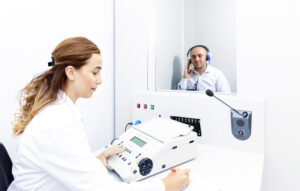
Audiology jobs are expected to grow faster than average between 2022 and 2032. The Bureau of Labor Statistics projects approximately 11% growth during this period, exceeding the average growth rate for all occupations.
This growth is driven by an aging population experiencing age-related hearing loss, increased awareness of hearing health, and technological advances in hearing devices. Baby Boomers reaching retirement age create consistent demand for audiology services, while younger generations show greater awareness of hearing conservation and early intervention.
Do Audiologists Make Good Money?
According to 2024 data from the Bureau of Labor Statistics, the median annual wage for audiologists was $82,680. This represents solid compensation for your years of education and clinical training.
The salary range varies based on experience, location, and work setting:
| Percentile | Annual Salary | Description |
|---|---|---|
| 10th Percentile | $61,000 | Entry-level positions, rural areas |
| 25th Percentile | $70,000 | Early career audiologists |
| Median (50th) | $82,680 | Mid-career professionals |
| 75th Percentile | $98,000 | Experienced specialists |
| 90th Percentile | $120,000+ | Top earners, specialized practices |
With advanced training, specialization, and more experience, you can climb the salary ladder. Those in the top 10% of the profession earn more than $120,000 per year, particularly in specialized settings like cochlear implant programs, private practice ownership, or hospital-based programs.
Work Settings for Audiologists
Audiologists work in diverse settings, each offering unique opportunities:
- Private Practice – Independent or group practices, often focusing on hearing aid dispensing
- Hospitals – Diagnostic audiology, cochlear implant programs, vestibular testing
- Physician Offices – ENT practices, medical audiology
- Schools – Educational audiology, supporting students with hearing loss
- Veterans Affairs Facilities – Serving military personnel and veterans
- Hearing Aid Retailers – Hearing aid selection and fitting
- Research Facilities – Clinical research, product development
Frequently Asked Questions
What’s the difference between an audiologist and a speech-language pathologist?
Audiologists focus on hearing, balance, and related disorders, requiring a Doctor of Audiology (AuD) degree. Speech-language pathologists work with speech, language, voice, and swallowing disorders and require a master’s degree. While both professions often collaborate and work with overlapping patient populations, audiologists specialize in hearing assessment, hearing aid fitting, cochlear implants, and vestibular testing. SLPs focus on communication therapy, language development, articulation, and swallowing rehabilitation.
Can I become an audiologist with just a master’s degree?
No, you cannot practice as an audiologist with only a master’s degree. Since 2007, the entry-level degree for audiology has been the Doctor of Audiology (AuD), which typically takes 3-4 years to complete after your bachelor’s degree. All states require the AuD for licensure, and professional certification organizations like ASHA require it for the CCC-A credential. If you’re interested in a faster path to working with communication disorders, consider speech-language pathology, which requires a master’s degree.
Are there online Doctor of Audiology programs?
Some universities offer hybrid or distance AuD programs that combine online coursework with required in-person clinical training. However, fully online programs aren’t possible due to the extensive hands-on clinical experience requirements. ASHA-accredited programs must ensure students complete supervised practicum hours in person. If you’re considering an online program, verify it’s ASHA-accredited and understand you’ll still need to complete substantial on-campus clinical rotations.
How competitive is admission to AuD programs?
AuD programs are moderately to highly competitive. Most programs require a GPA of 3.0 or higher, GRE scores, relevant observation or volunteer hours, and strong letters of recommendation. The most competitive programs may have acceptance rates of 10-20%. Your chances improve with a strong undergraduate record in science courses, relevant experience in audiology or healthcare settings, and a clear understanding of the profession demonstrated in your application essays.
Can audiologists prescribe medication?
No, audiologists cannot prescribe medication. While audiologists are doctors of audiology, they’re not medical doctors (MDs) or doctors of osteopathic medicine (DOs). Audiologists can diagnose hearing and balance disorders and recommend treatment, but prescribing medication must be done by physicians, typically otolaryngologists (ENT doctors). Audiologists often work closely with physicians to manage patients who require both medical and audiological care.
What specializations are available in audiology?
Audiologists can specialize in several area,s including pediatric audiology (working with infants and children), cochlear implant programming and management, vestibular assessment and rehabilitation (balance disorders), tinnitus management, educational audiology (working in schools), industrial audiology (hearing conservation programs), and geriatric audiology. The American Board of Audiology offers specialty certifications in pediatrics, cochlear implants, tinnitus management, and preceptor roles that recognize advanced expertise.
Do audiologists need continuing education?
Yes, continuing education is required to maintain both your state license and professional certification. ASHA requires 30 professional development hours every three years to maintain the CCC-A certification. State requirements vary but typically range from 20-40 hours every two years. Continuing education ensures you stay current with rapidly evolving hearing aid technology, cochlear implant advances, new diagnostic techniques, and evidence-based practices in audiology.
- Emerson College - Master's in Speech-Language Pathology online - Prepare to become an SLP in as few as 20 months. No GRE required. Scholarships available.
- Arizona State University - Online - Online Bachelor of Science in Speech and Hearing Science - Designed to prepare graduates to work in behavioral health settings or transition to graduate programs in speech-language pathology and audiology.
- NYU Steinhardt - NYU Steinhardt's Master of Science in Communicative Sciences and Disorders online - ASHA-accredited. Bachelor's degree required. Graduate prepared to pursue licensure.
- Pepperdine University - Embark on a transformative professional and personal journey in the online Master of Science in Speech-Language Pathology program from Pepperdine University. Our program brings together rigorous academics, research-driven faculty teaching, and robust clinical experiences, all wrapped within our Christian mission to serve our communities and improve the lives of others.
Key Takeaways
- Becoming an audiologist requires 7-8 years of education: a 4-year bachelor’s degree followed by a 3-4 year Doctor of Audiology (AuD) program, plus passing the Praxis exam and obtaining state licensure
- The audiology path is slightly longer than speech-language pathology (which requires a master’s degree), but both careers offer rewarding opportunities to help people with communication disorders
- All audiologists must graduate from ASHA-accredited programs and obtain state licensure; most states accept the Praxis examination, though some require additional jurisprudence or state-specific exams
- The profession offers strong job growth (11% projected through 2032) and competitive salaries, with median pay around $82,680 and top earners making $120,000 or more annually
- Audiologists can pursue specialty certificates in pediatrics, cochlear implants, tinnitus management, and vestibular rehabilitation, with work settings including hospitals, private practices, schools, and VA facilities
- Continuing education is required throughout your career to maintain licensure and certification, ensuring you stay current with advances in hearing technology and treatment methods
Ready to Start Your Audiology Career?
Explore ASHA-accredited Doctor of Audiology programs and take the first step toward this rewarding healthcare career. Find programs that match your goals and location.