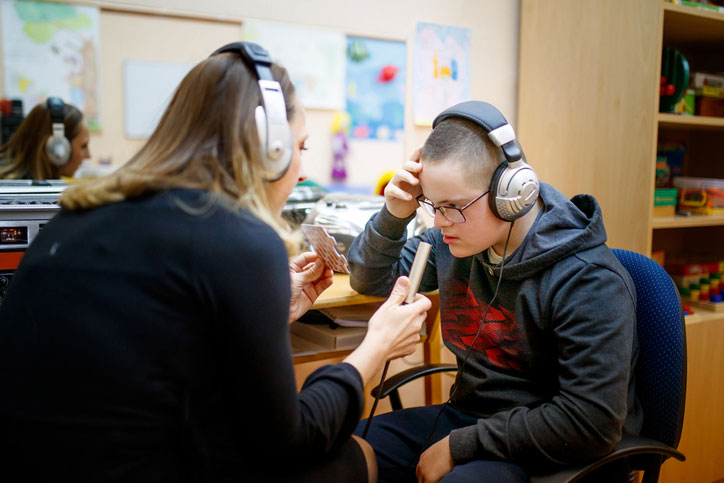

Speech-language pathologists (SLPs) treat communication and swallowing disorders with a master’s degree requirement, while audiologists diagnose hearing and balance issues needing a clinical doctorate (AuD). SLPs earn a median of $95,410 annually and audiologists $92,120, but education paths differ significantly—SLPs complete 2-year master’s programs versus audiologists’ 3-4 year doctoral programs.
- Emerson College - Master's in Speech-Language Pathology online - Prepare to become an SLP in as few as 20 months. No GRE required. Scholarships available.
- Grand Canyon University - Online Master of Science in Speech-Language Pathology. - This STEM program focuses on training aspiring speech-language pathologists to offer compassionate, effective services to individuals with communication disorders
- Arizona State University - Online - Online Bachelor of Science in Speech and Hearing Science - Designed to prepare graduates to work in behavioral health settings or transition to graduate programs in speech-language pathology and audiology.
- NYU Steinhardt - NYU Steinhardt's Master of Science in Communicative Sciences and Disorders online - ASHA-accredited. Bachelor's degree required. Graduate prepared to pursue licensure.
- Pepperdine University - Embark on a transformative professional and personal journey in the online Master of Science in Speech-Language Pathology program from Pepperdine University. Our program brings together rigorous academics, research-driven faculty teaching, and robust clinical experiences, all wrapped within our Christian mission to serve our communities and improve the lives of others.
Choosing between a career as a speech-language pathologist or audiologist can feel overwhelming when both professions share so much common ground. Both work with communication disorders, require graduate education, and offer rewarding opportunities to change lives. Yet the educational requirements, daily responsibilities, and career trajectories differ in ways that matter deeply to your future.
Understanding these differences helps you make an informed decision about which path aligns with your goals, interests, and commitment level. This comprehensive comparison examines everything from education and certification to salary and work settings, giving you the clarity you need to choose confidently.
How These Careers Overlap
 Speech-language pathology and audiology share deep professional connections. Both disciplines focus on communication disorders and require understanding how speech, hearing, and language work together in the brain. When you track these biological functions back to their neurological roots, you’ll find they’re intimately connected—which explains why professionals in both fields often collaborate on patient care.
Audiologists specialize in testing, diagnosing, and treating hearing and balance disorders. They’re the experts who determine what’s happening with a patient’s auditory system and develop treatment plans that might include hearing aids, cochlear implants, or auditory rehabilitation. Speech-language pathologists focus on the mechanics of speech production, language comprehension, and swallowing disorders. They use therapy techniques to help patients improve pronunciation, voice control, and oral motor function.
The relationship between hearing and speech creates natural overlap in these professions. Hearing loss is one of the most common causes of speech and language delays, particularly in children. An audiologist identifies and treats the hearing problem, while an SLP addresses the resulting communication challenges. In most clinical settings, you’ll find these professionals working side-by-side, sharing assessment results and coordinating treatment plans for better patient outcomes.
Key Differences in Professional Focus
While both professions involve communication disorders, the specific focus areas differ considerably:
| Focus Area | Speech-Language Pathologist | Audiologist |
|---|---|---|
| Primary System | Vocal tract, language centers, and swallowing | Auditory system, vestibular function |
| Assessment Tools | Speech samples, language tests, oral motor exams | Audiometers, tympanometry, and electrophysiological tests |
| Treatment Methods | Therapy exercises, compensatory strategies, AAC devices | Hearing aids, cochlear implants, and auditory training |
| Technology Focus | Communication devices, therapy software | Diagnostic equipment, amplification technology |
Education Requirements Compared
The most significant difference between these careers lies in educational requirements. This distinction affects not only how long you’ll spend in school but also the depth of specialized knowledge you’ll acquire and the financial investment required.
Speech-Language Pathology Education Path
Speech-language pathologists must earn a master’s degree in speech-language pathology or communication sciences and disorders. These programs typically require two years of full-time study beyond a bachelor’s degree. Most students complete their undergraduate work in communication sciences and disorders, though related fields like psychology, linguistics, or education can also provide appropriate preparation.
SLP graduate programs combine academic coursework with supervised clinical practicum experiences. You’ll study subjects including:
- Phonological and articulation disorders – Understanding speech sound production and treating pronunciation difficulties
- Language development and disorders – Learning how children acquire language and addressing delays or impairments
- Dysphagia assessment and treatment – Evaluating and treating swallowing disorders across all ages
- Voice and fluency disorders – Addressing stuttering, vocal quality issues, and resonance problems
- Neurogenic communication disorders – Treating aphasia, apraxia, and cognitive-communication issues
- Augmentative and alternative communication – Implementing technology and strategies for non-verbal patients
Clinical practicum is central to SLP education. You’ll complete a minimum of 400 supervised clinical hours during your graduate program, working with diverse patient populations across various settings. This hands-on experience prepares you for the clinical fellowship year required after graduation.
Already have a bachelor’s degree? Find a CAA-accredited speech-pathology master’s program to begin your journey toward certification.
Audiology Education Path
Audiologists must earn a Doctor of Audiology (AuD) degree, which typically requires three to four years of study beyond a bachelor’s degree. This doctoral-level requirement reflects the technical and medical complexity of diagnosing and treating auditory and vestibular disorders.
AuD programs provide intensive training in subjects such as:
- Anatomy and physiology of hearing – Detailed study of the peripheral and central auditory systems
- Psychoacoustics and acoustics – Understanding how humans perceive and process sound
- Diagnostic audiology – Mastering comprehensive hearing assessment techniques
- Hearing aid technology – Learning to select, fit, and program amplification devices
- Vestibular assessment and rehabilitation – Diagnosing and treating balance disorders
- Pediatric audiology – Specialized testing and intervention for infants and children
- Cochlear implants – Understanding candidacy evaluation and device programming
Like SLP programs, audiology education emphasizes practical experience. You’ll complete extensive clinical rotations in various settings, learning to use sophisticated diagnostic equipment and develop treatment plans for complex cases.
Finding a communication sciences and disorders undergraduate program is the first step toward either career path, providing foundational knowledge in speech, hearing, and language sciences.
Education Requirements Summary
| Requirement | Speech-Language Pathologist | Audiologist |
|---|---|---|
| Minimum Degree | Master’s degree (MA/MS) | Clinical doctorate (AuD) |
| Program Length | 2 years full-time | 3-4 years full-time |
| Clinical Hours | 400+ hours in graduate program | 1,820+ hours including externship |
| Post-Graduate Training | Clinical Fellowship Year (9 months) | Not typically required |
| Undergraduate Prerequisites | CSD or related field recommended | CSD or related field recommended |
Why Accreditation Matters
 Specialty accreditation isn’t just important—it’s essential for both professions. Both speech-language pathology and audiology programs rely on the same specialized accrediting body: the American Speech-Language-Hearing Association’s Council on Academic Accreditation (CAA).
CAA accreditation ensures programs meet rigorous standards for curriculum, faculty qualifications, clinical education, and student outcomes. Graduating from a CAA-accredited program is required to qualify for ASHA certification, which most employers consider the gold standard in both professions. Without CAA accreditation, your degree may not qualify you for licensure in many states or for professional certification.
As of 2024, more than 300 CAA-accredited SLP programs and 80 accredited audiology doctoral programs operate in the United States. When researching graduate programs, verify CAA accreditation through ASHA’s Council on Academic Accreditation before applying.
Dual-Focus Undergraduate Programs
If you’re still deciding between these career paths, consider a bachelor’s degree in audiology and speech-language pathology. These programs provide foundational coursework covering both disciplines, including speech and hearing sciences, phonology, neurology of communication, and rehabilitation techniques. This approach gives you the flexibility to pursue either a master’s in SLP or a doctorate in audiology after graduation.
Daily Work and Career Settings
The day-to-day reality of working as an SLP versus an audiologist differs considerably, even though both careers involve helping people with communication challenges. Understanding these differences helps you envision which professional environment suits your preferences and working style.
Speech-Language Pathology Career Settings
Most speech-language pathologists work in educational settings. According to ASHA, approximately 43% of SLPs are employed by schools or educational services. This heavy education focus means many SLPs work school hours with summers off—an appealing schedule for professionals seeking work-life balance.
In educational settings, SLPs provide therapy to students with communication disorders, language delays, articulation problems, and social communication difficulties. You’ll develop individualized education programs (IEPs), collaborate with teachers and parents, and track student progress through standardized assessments. The work is hands-on and relationship-focused, with opportunities to watch children develop crucial communication skills over time.
Beyond schools, SLPs work in diverse environments, including:
- Healthcare facilities – Hospitals, rehabilitation centers, and skilled nursing facilities treating patients with stroke, brain injury, or progressive neurological conditions
- Private practice – Providing specialized services to clients seeking individualized attention or specific expertise
- Early intervention programs – Working with infants and toddlers experiencing developmental delays
- Home health – Delivering therapy services in patients’ homes for those with mobility limitations
The SLP role emphasizes therapeutic relationships and long-term progress tracking. You’ll work closely with individual patients over weeks or months, developing customized treatment plans and celebrating incremental improvements. This continuity of care creates rewarding opportunities to form meaningful connections and witness transformation firsthand.
Explore diverse speech pathology career paths and specializations to discover which setting aligns with your interests.
Audiology Career Settings
Audiologists primarily work in healthcare environments rather than educational settings. You’ll most commonly find audiologists in hospitals, medical clinics, private audiology practices, and otolaryngology (ENT) offices. This healthcare focus means working year-round with more standardized schedules compared to school-based positions.
The daily work of an audiologist involves more diagnostic testing and technical procedures than direct therapy. You’ll administer hearing tests, conduct specialized assessments for balance disorders, fit and program hearing aids, and evaluate candidates for cochlear implants. The work requires technical precision and up-to-date knowledge of rapidly evolving hearing technology.
Typical audiology work settings include:
- Private practice – Operating independently or with partners, often focusing on hearing aid sales and fittings
- Hospitals and medical centers – Conducting diagnostic testing and working with medical teams on complex cases
- ENT physician offices – Providing audiology services as part of comprehensive otolaryngology care
- Hearing aid retail – Specializing in hearing aid technology, fitting, and follow-up services
- Schools – A smaller percentage work in educational audiology, screening students, and managing hearing assistive technology
Audiologists frequently work with older adults, as age-related hearing loss is extremely common. This patient population values the technical expertise audiologists provide in selecting and adjusting hearing devices for optimal benefit. The work tends to be more episodic than SLP practice, with patients returning periodically for hearing aid adjustments or annual hearing evaluations rather than weekly therapy sessions.
Daily Responsibilities Compared
| Work Aspect | Speech-Language Pathologist | Audiologist |
|---|---|---|
| Primary Activities | Therapy sessions, treatment planning, progress monitoring | Diagnostic testing, hearing aid fitting, and equipment programming |
| Patient Interaction | Frequent, ongoing therapeutic relationships | Periodic appointments for testing and device management |
| Primary Work Setting | Schools (43%), healthcare facilities, and private practice | Healthcare facilities, private practice, ENT offices |
| Technology Focus | AAC devices, therapy apps, video modeling | Audiometers, hearing aids, and cochlear implant equipment |
| Patient Age Groups | All ages, with emphasis on children | All ages, with emphasis on adults and seniors |
Licensing and Certification Requirements
 Both professions require state licensure and typically pursue national board certification, though the specific requirements differ based on the level of education and scope of practice.
Speech-Language Pathology Certification Path
The Certificate of Clinical Competence in Speech-Language Pathology (CCC-SLP) from ASHA is the nationally recognized credential for practicing SLPs. Earning this certification requires:
- Graduation from a CAA-accredited master’s or doctoral program
- Completion of a minimum of 400 supervised clinical clock hours during graduate study
- Passing the Praxis Examination in Speech-Language Pathology (minimum score varies by state)
- Completion of a Clinical Fellowship Year (CFY) under the supervision of a certified SLP
- Adherence to ASHA’s Code of Ethics
The Clinical Fellowship is a supervised professional experience lasting a minimum of 36 weeks. During this period, you’ll work under the guidance of a mentor who monitors your clinical decision-making and professional development. Successfully completing the CFY is the final step before receiving full CCC-SLP certification.
State licensure requirements generally align with ASHA certification standards, though specific details vary. Most states accept the CCC-SLP as meeting their licensure requirements, though some require additional state-specific examinations or jurisprudence tests. Before beginning practice, verify your target state’s specific requirements through its licensing board.
Audiology Certification Path
Audiologists pursue the Certificate of Clinical Competence in Audiology (CCC-A) from ASHA. Requirements include:
- Graduation from a CAA-accredited AuD program
- Completion of 1,820 hours of supervised clinical practicum (including a fourth-year clinical externship)
- Passing the Praxis Examination in Audiology
- Adherence to ASHA’s Code of Ethics
Unlike SLPs, audiologists typically complete their required supervised hours during their doctoral program rather than through a post-graduate fellowship. The fourth year of most AuD programs consists of a full-time clinical externship where you gain intensive experience under supervision.
State licensure requirements for audiologists generally mirror ASHA certification standards. Most states require the AuD degree, passing the Praxis exam, and may require state-specific jurisprudence exams covering local laws and regulations.
Dual Certification: Is It Possible?
Yes, you can become certified in both speech-language pathology and audiology, though it’s uncommon due to the extensive educational requirements. You would need to complete both a master’s degree in speech-language pathology and a doctorate in audiology, meeting all certification requirements for each profession separately.
According to ASHA, only 758 of its more than 218,000 members hold dual certification in both professions. While this path provides maximum flexibility and comprehensive expertise, the time and financial investment is substantial—typically requiring at least five to six years of graduate education.
Continuing Education Requirements
Both professions require ongoing continuing education to maintain certification and licensure. ASHA requires 30 hours of professional development every three years for certification maintenance. State requirements vary but typically range from 20-30 hours every two years. These requirements ensure professionals stay current with evolving research, techniques, and technology.
Salary and Compensation Analysis
Compensation for speech-language pathologists and audiologists is comparable, despite the difference in educational requirements. Both professions offer solid earning potential with opportunities for advancement based on experience, specialization, and work setting.
2024 Salary Overview
According to the Bureau of Labor Statistics’ May 2024 data, median annual salaries show speech-language pathologists earning slightly more than audiologists:
| Salary Percentile | Speech-Language Pathologist | Audiologist |
|---|---|---|
| 10th Percentile (Entry Level) | $60,480 | $61,930 |
| 25th Percentile | $75,310 | Not reported |
| Median (50th Percentile) | $95,410 | $92,120 |
| 75th Percentile | $112,510 | Not reported |
| 90th Percentile (Top Earners) | $132,850 | $129,830 |
| Mean Annual Wage | $95,840 | Not reported |
The relatively small difference in median salaries—only $3,290—is noteworthy given that audiologists invest an additional one to two years in doctoral education. This salary parity reflects strong demand for both professions and the specialized expertise each requires.
Salary by Work Setting
Compensation varies considerably based on where you work. Different employment settings offer distinct advantages beyond base salary, including schedule flexibility, benefits, and advancement opportunities.
For speech-language pathologists, the highest-paying settings include:
- Nursing and residential care facilities – Often pay premium wages to attract qualified candidates
- Home health services – Competitive compensation reflecting the flexibility and travel requirements
- Hospitals – Strong salaries with comprehensive benefits packages
- Private practice – Earning potential depends on caseload and specialization
Audiologists earn the highest salaries in:
- Private practice – Particularly practices focused on hearing aid sales and dispensing
- Hospitals – Medical settings offering competitive compensation for diagnostic services
- ENT physician offices – Integrated care models providing steady income
- Government facilities – VA hospitals and military bases often offer strong compensation packages
School-based positions for SLPs typically pay less than medical settings but offer significant non-monetary benefits, including summers off, school holidays, and predictable schedules that appeal to professionals seeking work-life balance.
For detailed salary information by state and metropolitan area, review speech pathologist salaries by state to understand geographic variations in compensation.
Factors Affecting Earning Potential
Several factors influence how much you’ll earn in either profession:
- Geographic location – Cost of living and regional demand significantly impact salaries. States like California, Connecticut, and New Jersey typically offer the highest compensation for both professions.
- Years of experience – Both professions show steady salary growth with experience, with the most significant increases occurring in the first 10 years of practice.
- Specialization – SLPs specializing in areas like dysphagia or pediatric feeding, and audiologists with expertise in cochlear implants or vestibular disorders, often command higher rates.
- Advanced certifications – Specialty certifications beyond the CCC credential can increase marketability and earning potential.
- Employment setting – Medical settings generally pay more than educational environments, though benefits packages vary.
Job Growth and Employment Outlook
Both speech-language pathology and audiology offer excellent job prospects, though SLP positions are expected to grow more rapidly. These projections reflect demographic trends, increased awareness of communication disorders, and expanding service delivery models.
Speech-Language Pathology Outlook
The Bureau of Labor Statistics projects 15% employment growth for speech-language pathologists from 2024 to 2034—much faster than the 3% average for all occupations. This translates to approximately 13,300 job openings annually over the decade.
Several factors drive this growth:
- Aging population – Increasing numbers of older adults experiencing stroke, dementia, and other conditions affecting communication and swallowing
- Early identification programs – Expanded newborn hearing screening and early intervention services are identifying more children needing speech services
- Medical advances – Improved survival rates for premature infants, stroke victims, and trauma patients who may require speech therapy
- Autism awareness – Rising autism diagnoses increasing demand for social communication intervention
- School-based services – Federal education mandates ensure continued demand in educational settings
The heavy concentration of SLPs in educational settings (43% of the profession) means consistent employment opportunities exist wherever schools operate, providing geographic flexibility for job seekers.
Audiology Outlook
Audiologists can expect 9% employment growth from 2024 to 2034—also much faster than the average for all occupations. The BLS projects approximately 700 annual job openings for audiologists over the decade.
Growth factors for audiology include:
- Aging Baby Boomers – Large numbers reaching ages where hearing loss becomes prevalent
- Technology advances – Improved hearing aid technology and smaller, more discreet devices are increasing acceptance and use
- Early identification – Universal newborn hearing screening programs identify infants needing audiological services
- Noise-induced hearing loss – Growing awareness of recreational and occupational noise exposure is creating demand for prevention and treatment
- Vestibular services – Expanded recognition of audiologists’ role in balance disorder assessment and treatment
While audiology shows strong growth, the smaller number of total positions (about 13,880 audiologists compared to 178,790 SLPs nationally in 2024) means fewer absolute job openings. However, competition for positions may be less intense given the doctoral education requirement.
Employment Numbers and Market Saturation
The significant difference in total employment between professions reflects their distinct roles in healthcare and education:
| Employment Factor | Speech-Language Pathologist | Audiologist |
|---|---|---|
| Total Employment (2024) | 178,790 | 13,880 |
| Projected Growth Rate | 15% (2024-2034) | 9% (2024-2034) |
| Annual Job Openings | ~13,300 | ~700 |
| Market Competition | Moderate in most areas | Variable; less competition due to doctoral requirement |
Both professions offer strong employment prospects with opportunities for new graduates. The larger SLP market provides more total opportunities and geographic flexibility, while audiology’s smaller, more specialized market may offer less competition for qualified candidates.
Making Your Career Decision
Choosing between speech-language pathology and audiology requires an honest assessment of your interests, lifestyle preferences, and commitment to graduate education. Both careers offer meaningful work and solid compensation, but they suit different personalities and professional goals.
Choose Speech-Language Pathology If You:
- Enjoy hands-on therapy – Prefer direct, ongoing therapeutic relationships with patients over time
- Want to work with children – Most SLPs work extensively with pediatric populations, especially in schools
- Prefer a master’s degree path – Can begin your career with two years of graduate study plus a clinical fellowship
- Value work-life balance – School-based positions offer summers off and predictable schedules
- Like variety in your caseload – Work with diverse disorders from articulation to swallowing to language
- Want more job opportunities – A Larger profession with more positions available nationwide
Choose Audiology If You:
- Enjoy technical work – Prefer diagnostic testing and technical procedures to ongoing therapy
- Like healthcare settings – Most audiologists work in medical clinics, hospitals, or private practice
- Are comfortable with doctoral education – Willing to invest 3-4 years in doctoral-level training
- Prefer working with adults – Much of audiology practice involves fitting hearing aids for older adults
- Are interested in technology – Work extensively with sophisticated diagnostic equipment and hearing devices
- Want episodic patient interactions – See patients for evaluations and device management rather than ongoing therapy
Why SLPs Need Audiology Knowledge
Regardless of which path you choose, speech-language pathologists must understand audiology principles. Humans learn speech by hearing it—if something disrupts the auditory system, speech and language development inevitably suffer. Without understanding how hearing loss affects speech production and language acquisition, SLPs can’t effectively treat many common communication disorders.
This is why all SLP graduate programs include coursework in hearing science, auditory disorders, and audiological assessment. You need this foundation to recognize when a patient’s communication difficulties stem from hearing problems, understand audiological reports from colleagues, and coordinate care effectively with audiologists on your treatment team.
Frequently Asked Questions
What is the main difference between a speech-language pathologist and an audiologist?
Speech-language pathologists treat speech, language, and swallowing disorders through therapy and rehabilitation, requiring a master’s degree. Audiologists diagnose and treat hearing and balance disorders using technical assessments and hearing devices, requiring a clinical doctorate (AuD). While SLPs focus on the vocal tract and language centers, audiologists specialize in the auditory and vestibular systems.
Do audiologists make more money than speech-language pathologists?
Speech-language pathologists actually earn slightly more on average. According to 2024 BLS data, the median annual salary for SLPs is $95,410 compared to $92,120 for audiologists. However, salaries vary significantly by work setting, geographic location, and experience level. The difference is relatively small considering audiologists require additional years of doctoral education.
Can you become both an SLP and an audiologist?
Yes, but it’s uncommon due to the extensive educational requirements. You would need to complete both a master’s degree in speech-language pathology and a Doctor of Audiology degree, meet all certification requirements for each profession separately, and maintain continuing education for both credentials. According to ASHA, only 758 of its 218,000+ members hold dual certification in both fields.
How do speech-language pathologists and audiologists work together?
These professionals frequently collaborate on patient care, especially when hearing loss contributes to communication difficulties. Typically, an audiologist screens and diagnoses hearing issues, then shares findings with the SLP, who develops speech and language therapy plans based on that information. They may co-lead auditory training programs or coordinate care for patients with complex communication needs stemming from both hearing and speech challenges.
Which career has better job growth prospects?
Speech-language pathology shows stronger growth prospects. The BLS projects 15% employment growth for SLPs from 2024-2034 compared to 9% for audiologists—both much faster than the 3% average for all occupations. SLP growth translates to approximately 13,300 annual job openings versus 700 for audiologists, reflecting the larger size of the SLP profession and high demand in educational settings.
Should I choose SLP or audiology if I want to work with children?
Speech-language pathology offers more opportunities to work with children. About 43% of SLPs work in schools, and many others specialize in pediatric settings like early intervention programs or children’s hospitals. While audiologists also work with children—particularly in pediatric audiology, evaluating infants and fitting hearing aids for kids—the majority of audiology practice focuses on adult patients with age-related hearing loss.
Is the extra education for audiology worth it financially?
The financial return on the additional 1-2 years of doctoral education for audiology is modest. SLPs earn a median of $95,410 versus $92,120 for audiologists—only $3,290 less despite requiring less education. However, the decision shouldn’t be purely financial. Consider factors like your interest in technical versus therapeutic work, preferred patient populations, and desired work settings. Both careers offer solid compensation and job security, making personal fit more important than salary differences.
Key Takeaways
- Education requirements differ significantly – SLPs need a master’s degree (2 years) while audiologists require a clinical doctorate (3-4 years), affecting both time and financial investment
- Salaries are comparable despite educational differences – SLPs earn a median of $95,410 and audiologists $92,120 annually, according to 2024 BLS data
- Work settings vary considerably – Most SLPs work in schools (43%,) while audiologists primarily practice in healthcare facilities, private practice, and medical offices
- Job growth favors speech-language pathology – SLP positions are projected to grow 15% (2024-2034) with 13,300 annual openings, compared to 9% growth and 700 openings for audiologists
- Daily responsibilities reflect different focus areas – SLPs provide ongoing therapy sessions for communication and swallowing disorders, while audiologists conduct diagnostic testing and fit hearing devices
- Both professions require CAA-accredited programs and national certification – Graduating from accredited programs and earning ASHA certification (CCC-SLP or CCC-A) are essential for licensure and employment in both fields
- Emerson College - Master's in Speech-Language Pathology online - Prepare to become an SLP in as few as 20 months. No GRE required. Scholarships available.
- Grand Canyon University - Online Master of Science in Speech-Language Pathology. - This STEM program focuses on training aspiring speech-language pathologists to offer compassionate, effective services to individuals with communication disorders
- Arizona State University - Online - Online Bachelor of Science in Speech and Hearing Science - Designed to prepare graduates to work in behavioral health settings or transition to graduate programs in speech-language pathology and audiology.
- NYU Steinhardt - NYU Steinhardt's Master of Science in Communicative Sciences and Disorders online - ASHA-accredited. Bachelor's degree required. Graduate prepared to pursue licensure.
- Pepperdine University - Embark on a transformative professional and personal journey in the online Master of Science in Speech-Language Pathology program from Pepperdine University. Our program brings together rigorous academics, research-driven faculty teaching, and robust clinical experiences, all wrapped within our Christian mission to serve our communities and improve the lives of others.
Ready to Start Your Journey?
Whether you choose speech-language pathology or audiology, both careers offer rewarding opportunities to improve lives through better communication and hearing. The right path depends on your interests, educational commitment, and preferred work environment. Take the next step by exploring accredited graduate programs that align with your career goals.
2024 US Bureau of Labor Statistics salary and job market figures for Speech-Language Pathologists and Audiologists reflect national data. Conditions in your area may vary. Data accessed November 2025.