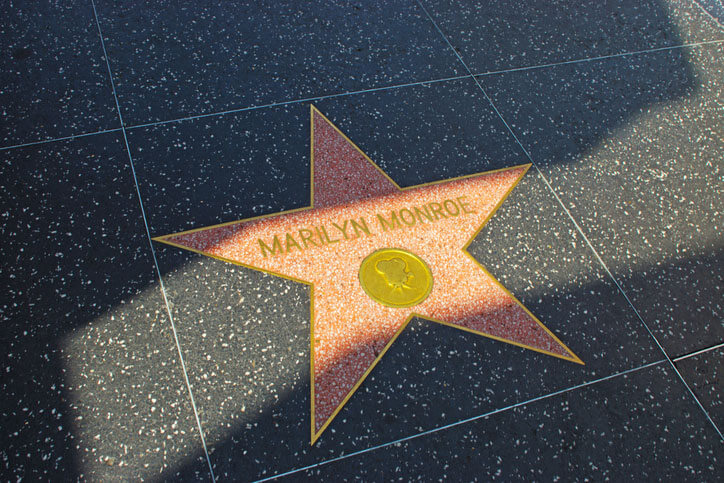

Eight famous people overcame significant speech disorders to achieve extraordinary success: Marilyn Monroe, Jimmy Stewart, Sam Neill, Winston Churchill, Joe Biden, James Earl Jones, Nicole Kidman, and Emily Blunt. Their journeys prove that speech challenges don’t limit potential when addressed with perseverance, professional support, and determination.
- Emerson College - Master's in Speech-Language Pathology online - Prepare to become an SLP in as few as 20 months. No GRE required. Scholarships available.
- Arizona State University - Online - Online Bachelor of Science in Speech and Hearing Science - Designed to prepare graduates to work in behavioral health settings or transition to graduate programs in speech-language pathology and audiology.
- Pepperdine University - Embark on a transformative professional and personal journey in the online Master of Science in Speech-Language Pathology program from Pepperdine University. Our program brings together rigorous academics, research-driven faculty teaching, and robust clinical experiences, all wrapped within our Christian mission to serve our communities and improve the lives of others.
- Aurora University - BS Communication Sciences and Disorders program - Discover how to transform lives by identifying and treating communication disorders for people of all ages. You’ll gain hands-on experience while fulfilling requirements toward graduate education.
- Arkansas State University - Dyslexia Certificate - Build upon your teaching expertise by adding a specialization in dyslexia with their Dyslexia Certificate online program.
- Eastern Oregon University - Master of Science in Education with a specialization in Dyslexia - Provides an advanced study of best practices and applications for PK–12 contexts with a specialization in Dyslexia.
- The University of West Alabama - Master of Education in Dyslexia Therapy - Enter an emerging field to support students with dyslexia and related reading challenges by earning your MEd in Dyslexia Therapy degree.
According to the Centers for Disease Control and Prevention, 7.7% of children ages 3-17 had a communication disorder in 2012, while the National Institute on Deafness and Other Communication Disorders (NIDCD) reports that 7.6% of U.S. adults experience voice problems annually. The American Speech-Language-Hearing Association (ASHA) estimates that approximately 40 million Americans live with communication disorders. For many, these challenges feel overwhelming, especially when facing social stigma or self-doubt. Yet history and Hollywood prove that speech disorders don’t define a person’s potential for greatness.
From Academy Award winners to world leaders, countless individuals have transformed their speech challenges into strengths. Their stories offer hope, inspiration, and proof that with proper support from speech-language pathologists and personal determination, anyone can achieve their dreams regardless of communication difficulties.
This article profiles eight remarkable individuals who didn’t let stuttering, speech impediments, or selective mutism stand in their way. Their experiences highlight the importance of early intervention, speech therapy, and the resilience of the human spirit.
Why Speech Disorders Don’t Define Success
Speech disorders affect millions of Americans, yet many people achieve extraordinary success despite these challenges. The key difference often lies in access to quality speech-language pathology services, supportive environments, and personal determination.
Modern research shows that early intervention and consistent speech therapy can dramatically improve outcomes for individuals with communication disorders. The celebrities featured in this article didn’t simply “overcome” their disorders through willpower alone. Many worked with speech therapists, practiced extensively, and developed coping strategies that allowed them to succeed.
Their success stories serve as powerful reminders that speech disorders are manageable conditions, not permanent barriers. With proper treatment and support, individuals with communication challenges can excel in any field, including those requiring extensive public speaking, like acting, politics, and broadcasting.
8 Famous People Who Overcame Speech Challenges
1. Marilyn Monroe – Childhood Trauma and Stuttering
Marilyn Monroe remains one of Hollywood’s most iconic figures, but few know about the speech disorder that plagued her childhood and occasionally resurfaced throughout her life. Born Norma Jeane Mortenson, Monroe experienced severe trauma at age seven when her mother suffered a schizophrenic breakdown and was committed to a state hospital.
Historical accounts indicate that traumatic childhood events, including her mother’s hospitalization, coincided with the development of a pronounced stutter that made young Norma withdrawn and socially isolated. As a ward of the state, she moved between foster homes and an orphanage, environments that offered little support for her communication difficulties. The constant instability reportedly intensified her speech challenges.
Through persistent effort during her teenage years, Monroe worked to control her stutter enough that most people never knew about it. She has been reported to have mentioned in interviews that the stutter would occasionally resurface when she felt nervous or overwhelmed, demonstrating that even successful management of speech disorders may involve ongoing attention.
2. Jimmy Stewart – Making Stuttering His Signature
Jimmy Stewart stands as one of Hollywood’s golden age treasures, with classics like “It’s a Wonderful Life” (1946), “Rear Window” (1954), and “Vertigo” (1958) cementing his legendary status. Unlike many who tried to hide their speech disorders, Stewart embraced his stutter and made it part of his unique on-screen persona.
His characteristic pauses and stammering delivery became signature elements that audiences loved. Fellow actor Michael Palin noted, “Jimmy Stewart dealt with his stutter openly and elegantly – it became a charming part of his persona.” This acceptance transformed what could have been a career obstacle into a distinctive quality that made Stewart’s performances memorable and authentic.
Stewart’s approach offers an important lesson: speech differences don’t always need to be eliminated completely. Sometimes, accepting and working with these characteristics can become a source of strength and individuality.
3. Sam Neill – From Silence to Stardom
Best known as Dr. Alan Grant in “Jurassic Park” (1993) and for roles in “The Piano” (1993), “The Hunt for Red October” (1990), and “Thor: Ragnarok” (2017), Sam Neill’s commanding screen presence belies his childhood struggle with severe stuttering.
As a child, Neill’s stutter was so debilitating that he became extremely self-conscious, avoiding eye contact and hoping others wouldn’t speak to him. The fear of having to respond verbally dominated his early years. He kept to himself, not out of shyness, but from the anxiety of potentially stuttering in social situations.
While Neill eventually managed his stutter through therapy and practice, he has acknowledged that he never completely eliminated it. His experience demonstrates that even incomplete “recovery” doesn’t prevent extraordinary achievement. Success comes from managing symptoms effectively, not necessarily achieving perfect fluency.
4. Winston Churchill – Wartime Leader’s Speech Challenge
Winston Churchill led Britain through World War II with speeches that inspired a nation and changed history. Yet this legendary orator struggled with a speech sound disorder throughout his life, particularly with pronouncing the letter “s” and certain other sounds.
It’s important to note that Churchill’s difficulty was not stuttering, as many journalists mistakenly reported. The International Churchill Society clarifies that it was a speech impediment affecting the articulation of specific sounds. In 1897, Churchill consulted a speech specialist who found no pathological issues, recommending practice and perseverance as the solution.
Churchill reportedly worked with professionals who offered various explanations for his articulation challenges. Regardless of the exact nature of his disorder, Churchill developed extraordinary coping mechanisms. He practiced tongue twisters extensively and carefully rehearsed his diction before major speeches.
His famous wartime addresses required hours of preparation and practice, but the effort paid off. Churchill’s determination to master public speaking despite his speech impediment demonstrates that limitations can be overcome through dedication and strategic practice.
5. Joe Biden – Vice President’s Journey from Bullying
Joe Biden served as Vice President during President Obama’s administration from 2009 to 2017 and was elected the 46th President of the United States in 2020. Few would guess that this skilled orator once struggled with such severe stuttering that he was bullied relentlessly as a child.
In a 2016 letter to his 12-year-old self, Biden wrote: “You’re only 12. Your stutter is debilitating. It embarrasses you, and the bullies are vicious.” The pain of those experiences drove Biden to take control of his speech disorder.
In his twenties, Biden committed to overcoming his stutter through an intensive personal program: reciting poetry in front of a mirror for hours each day. This rigorous self-directed speech therapy, combined with professional support, gradually improved his fluency. While he occasionally stumbles on words, most people are unaware of his childhood struggle.
Biden’s story highlights the effectiveness of consistent practice and determination in managing speech disorders. His openness about his journey has inspired countless others facing similar challenges.
6. James Earl Jones – From Mutism to Iconic Voice
Perhaps the most dramatic transformation on this list belongs to James Earl Jones, the legendary voice of Darth Vader in “Star Wars” (1977-1983) and Mufasa in “The Lion King” (1994). Jones has also starred in “Dr. Strangelove” (1964), “Conan the Barbarian” (1982), and “The Hunt for Red October” (1990).
Amazingly, this man with one of the most recognizable and powerful voices in entertainment history was effectively mute for eight years of his childhood. When Jones was five years old, his mother sent him to live with his grandparents. The traumatic separation triggered such severe stuttering that Jones chose to stop speaking entirely rather than face the embarrassment.
Jones remained largely silent until a high school English teacher recognized his intelligence and encouraged him to read poetry aloud in class. This supportive intervention marked the beginning of Jones’ journey back to verbal communication. The teacher’s patience and encouragement gave Jones the confidence to work through his stutter gradually.
Jones’ transformation from a child who couldn’t speak to becoming one of the most celebrated voices in film history demonstrates the profound impact that compassionate support and quality intervention can have on individuals with severe speech disorders.
7. Nicole Kidman – Stammering in Childhood
Academy Award-winning actress Nicole Kidman, known for roles in “Moulin Rouge!” (2001), “The Hours” (2002), and “Big Little Lies” (2017-2019), has been reported to have struggled with stammering during her childhood in Australia. While less publicly discussed than some others on this list, Kidman has acknowledged her early speech difficulties in interviews.
According to reports, Kidman’s parents supported her passion for acting despite her speech challenges, recognizing that performance could actually help her gain confidence. Drama classes and acting exercises provided structured opportunities to practice speaking, similar to formal speech therapy techniques. The repetitive nature of rehearsing lines and performing in supportive environments reportedly helped Kidman develop greater fluency.
Her success illustrates how creative pursuits like theater can serve as therapeutic outlets for children with speech disorders, building confidence while providing natural speech practice opportunities.
8. Emily Blunt – Stuttering Actress Turned Action Star
British actress Emily Blunt, star of “The Devil Wears Prada” (2006), “A Quiet Place” (2018), and “Mary Poppins Returns” (2018), has been remarkably open about her childhood stutter. The Stuttering Foundation includes Blunt among the famous people who have publicly discussed their speech disorders. Blunt has described her stutter as severe, affecting her daily life and self-confidence throughout her early years.
What changed everything for Blunt was a teacher who encouraged her to try speaking in different accents. This technique helped her brain approach speech differently, reducing the stuttering pattern. The strategy of using character voices and accents became so effective that Blunt pursued acting as a career.
Blunt remains an active advocate for children with speech disorders. She has spoken at the American Institute for Stuttering’s annual gala and uses her platform to reduce stigma around communication disorders. Her advocacy work emphasizes that speech disorders are nothing to be ashamed of and that professional help can make a tremendous difference.
Blunt’s willingness to discuss her ongoing management of stuttering – she still experiences it occasionally under stress – helps normalize speech disorders and encourages others to seek help without shame.
Understanding Speech Disorders
The celebrities featured in this article experienced various types of speech and communication disorders. Understanding these conditions helps recognize why proper diagnosis and treatment matter so much. According to the NIDCD, approximately 5% of children ages 3-17 have a speech disorder lasting a week or longer, while 3.3% have a language disorder.
| Disorder Type | Primary Characteristics | Typical Onset | Treatment Approach |
|---|---|---|---|
| Stuttering (Stammering) | Repetition of sounds, syllables, or words; prolongations of sounds; blocks in speech flow | Ages 2-5, though it can occur at any age | Fluency shaping techniques, stuttering modification therapy, and confidence building |
| Speech Sound Disorder | Difficulty pronouncing specific sounds or letters correctly | Childhood, usually noticed by age 3-4 | Articulation therapy, phonological awareness exercises |
| Selective Mutism | Inability to speak in specific social situations despite speaking normally in comfortable settings | Early childhood, often triggered by trauma or extreme anxiety | Behavioral therapy, gradual exposure, anxiety management, and speech therapy |
| Voice Disorders | Problems with pitch, volume, or quality of voice | It can occur at any age, with various causes | Voice therapy, medical intervention if needed, and vocal hygiene training |
These disorders affect millions of Americans across all age groups. The experiences of famous individuals help raise awareness that speech disorders are common, treatable, and no barrier to success when proper support is available.
How Speech Therapy Helps
Speech-language pathologists (SLPs) are trained professionals who assess, diagnose, and treat communication disorders. Their interventions made a difference for many of the celebrities featured in this article, even if they didn’t always acknowledge formal therapy publicly.
Modern speech therapy techniques include:
Fluency Shaping: This approach teaches individuals with stuttering how to speak more fluently by starting with very simple speech patterns and gradually increasing complexity. Techniques include slowed speech rate, gentle onset of sounds, and continuous airflow.
Stuttering Modification: Rather than trying to eliminate stuttering completely, this method teaches individuals to stutter more easily and with less tension, reducing the emotional impact and physical struggle of stuttering moments.
Articulation Therapy: For speech sound disorders, as Churchill experienced, SLPs work on correctly producing specific sounds through targeted exercises, positioning cues, and systematic practice.
Confidence Building: Many speech therapy programs incorporate cognitive-behavioral techniques to address the anxiety and low self-esteem that often accompany speech disorders. This psychological component is crucial for long-term success.
Practice Strategies: SLPs teach effective home practice techniques. Joe Biden’s mirror exercises and Churchill’s tongue twisters are examples of self-directed practice methods that complement professional therapy.
Early intervention produces the best outcomes, but as these celebrity stories prove, improvement is possible at any age with appropriate support and dedication.
Frequently Asked Questions
Can you be successful with a speech disorder?
Absolutely. As these eight famous individuals demonstrate, speech disorders don’t limit potential for success. With appropriate support from speech-language pathologists, consistent practice, and determination, people with speech disorders excel in all professions, including those requiring extensive verbal communication like acting, politics, and broadcasting. The key is getting a proper diagnosis and evidence-based treatment early.
What speech disorders did these celebrities have?
The celebrities featured experienced different disorders: Marilyn Monroe, Jimmy Stewart, Sam Neill, Joe Biden, and Emily Blunt all had stuttering (stammering). Winston Churchill had a speech sound disorder affecting his pronunciation of certain letters, particularly “s.” James Earl Jones experienced selective mutism triggered by childhood trauma. Nicole Kidman also struggled with stammering as a child. Each required different therapeutic approaches and developed unique coping strategies.
How did they overcome their speech disorders?
Most combined professional speech therapy with intensive personal practice. Joe Biden recited poetry in front of mirrors for hours daily. Churchill practiced tongue twisters and carefully rehearsed speeches. Emily Blunt used accents and character voices. James Earl Jones had a supportive teacher who gradually helped him return to speaking. Jimmy Stewart took a different approach by accepting his stutter and incorporating it into his acting style. The common thread is dedication, professional support, and refusing to let the disorder define their potential.
Should I see a speech-language pathologist for stuttering?
Yes, consulting a certified speech-language pathologist (SLP) is highly recommended if you or your child experiences stuttering or any speech disorder. SLPs conduct comprehensive assessments to determine the type and severity of the disorder and develop evidence-based treatment plans. Early intervention produces the best outcomes, but therapy can help at any age. Many of the celebrities in this article likely received professional guidance even if they didn’t publicly discuss it.
What’s the difference between a stutter and a speech impediment?
Stuttering is a specific type of speech disorder characterized by disruptions in the flow of speech, including repetitions, prolongations, and blocks. A “speech impediment” is a broader, non-clinical term that encompasses various communication difficulties, including stuttering, articulation disorders (difficulty pronouncing sounds), voice disorders, and fluency problems. Winston Churchill’s difficulty pronouncing certain letters would be classified as an articulation or phonological disorder, while Joe Biden’s childhood challenge was specifically stuttering.
Are speech disorders genetic?
Research indicates that some speech disorders have genetic components. Stuttering, for example, tends to run in families, with children who have a family history of stuttering at higher risk of developing the disorder. However, genetics isn’t the only factor. Environmental influences, childhood trauma (as in James Earl Jones’ case), developmental factors, and neurological conditions can all contribute to speech disorders. Even when genetic factors are present, appropriate intervention can still produce excellent outcomes.
Can speech disorders come back after treatment?
Yes, speech disorders can resurface, especially during periods of stress, fatigue, or emotional upheaval. Marilyn Monroe mentioned her stutter would return when nervous, and Emily Blunt has acknowledged occasional stuttering under pressure even as an adult. This doesn’t mean treatment failed. Many people learn to manage their disorders effectively most of the time while accepting that symptoms may occasionally increase during challenging periods. Ongoing practice of learned techniques helps maintain improvements.
Key Takeaways
- According to ASHA, approximately 40 million Americans experience communication disorders, including famous, successful individuals like Marilyn Monroe, Joe Biden, and James Earl Jones
- Different types of speech disorders require different treatment approaches, from fluency shaping for stuttering to articulation therapy for sound production difficulties
- Early intervention with certified speech-language pathologists produces the best outcomes, though improvement is possible at any age with proper support
- Success with speech disorders comes from a combination of professional therapy, dedicated practice, supportive environments, and personal determination
- Speech disorders don’t define potential—individuals with these challenges excel in all fields, including those requiring extensive verbal communication
- Accepting and working with speech differences, as Jimmy Stewart demonstrated, can sometimes be as effective as trying to eliminate them completely
- Emerson College - Master's in Speech-Language Pathology online - Prepare to become an SLP in as few as 20 months. No GRE required. Scholarships available.
- Arizona State University - Online - Online Bachelor of Science in Speech and Hearing Science - Designed to prepare graduates to work in behavioral health settings or transition to graduate programs in speech-language pathology and audiology.
- Pepperdine University - Embark on a transformative professional and personal journey in the online Master of Science in Speech-Language Pathology program from Pepperdine University. Our program brings together rigorous academics, research-driven faculty teaching, and robust clinical experiences, all wrapped within our Christian mission to serve our communities and improve the lives of others.
- Aurora University - BS Communication Sciences and Disorders program - Discover how to transform lives by identifying and treating communication disorders for people of all ages. You’ll gain hands-on experience while fulfilling requirements toward graduate education.
- Arkansas State University - Dyslexia Certificate - Build upon your teaching expertise by adding a specialization in dyslexia with their Dyslexia Certificate online program.
- Eastern Oregon University - Master of Science in Education with a specialization in Dyslexia - Provides an advanced study of best practices and applications for PK–12 contexts with a specialization in Dyslexia.
- The University of West Alabama - Master of Education in Dyslexia Therapy - Enter an emerging field to support students with dyslexia and related reading challenges by earning your MEd in Dyslexia Therapy degree.
Inspired to Help Others Overcome Communication Challenges?
Speech-language pathologists make life-changing differences for individuals with communication disorders. If these inspiring stories have motivated you to pursue a career helping others find their voice, explore accredited graduate programs in speech-language pathology.
Information about speech disorders, their prevalence, and treatment approaches is for educational purposes only and should not replace professional medical advice. Historical information about public figures is based on available biographical sources and public statements. If you or someone you know is experiencing speech or communication difficulties, consult with a certified speech-language pathologist or healthcare provider for proper assessment and treatment recommendations. Prevalence data sourced from CDC/NCHS, NIDCD, and ASHA, accessed November 2025.